|
DEMAND SIDE:
Leisure Tourists
Behaviour
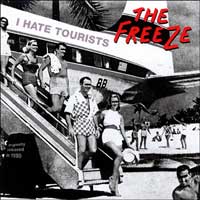
Travel
career paths
Tourists learn to be a
tourist in different ways in different times - age cohorts keep
their learned preferences.
|
Example
"Silver Tourism"
Tourism
Demand and behaviour of
German tourists between
55 and 65 years of age in
- 1990 (born around 1930)
-
2000 (born around 1940)
- 2010 (born around 1950)
-
2020 (born around 1960)
- 2040 (born around 1980)
|
Social
contacts
Tourists and hosts: From
personal hospitality to commercial hospitality
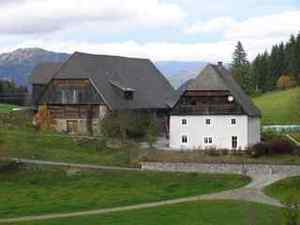
Example: Austrian mountain
farm
Tourists and hosts: The
Tourist Gaze and Hosts reactions
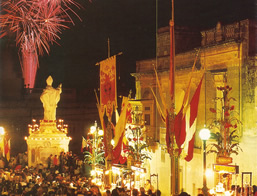
Example: Maltese festa
Tourists and tourists
Other tourists seen as:
potential friend/partner
travel companion
helper
security
guard
stimulation
scenery
stranger
disturber
competitor
<---------------------------------------------------------------------------------------------------->
positive
------------------------------------- neutral --------------------------------------negative
Depending on own demand and
behaviour and sourroundings/situation:
Crowds are nice in a
big city New Years Eve party, but spoiling the fun at the beach.
On-Site Experiences:
- Spatial pattern
City Tourism: Tourist
Bubbles, average speed
Nature Tourism: Unspoilt / Clean,
Pristine / Accessible
- Search for Authenticity
In the study of tourism, the conception of authenticity has
undergone three shifts over the past 40 years, with objectivist framings
giving way to a social construction perspective and, later,
existentialist conceptions. The shift to an existentialist understanding
reframes authenticity in terms of the tourists rather than the cultures he or
she encounters while touring.
The three steps can also be described as looking at the
authenticity of
|
- the observed tourist object
"object-related authenticity":
(1) "objective object-related authenticity"
|

(1) Schreiben Heinrich VIII an Pommern-Fürst
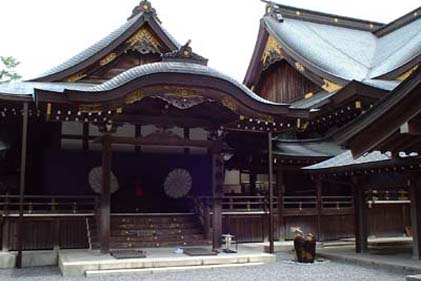
(1) Ise-Shrine 1997 (first 690, reconstructed
every 20 years)
|
|
and
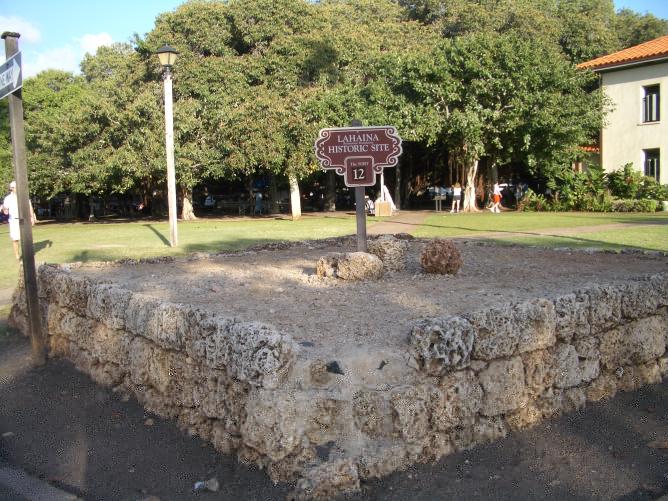
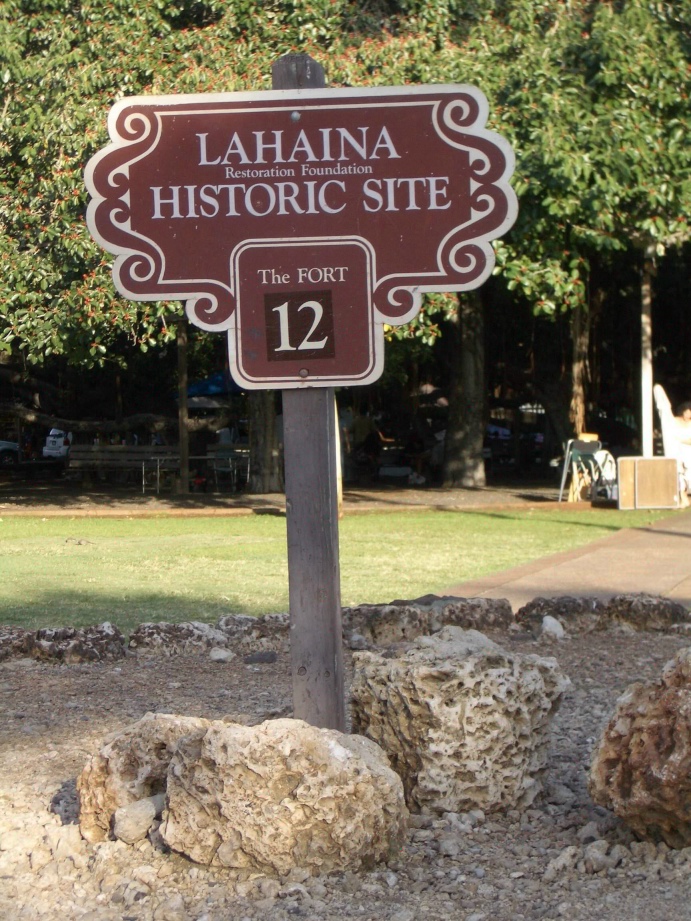
(2) "constructed object-related
authenticity"
and
|
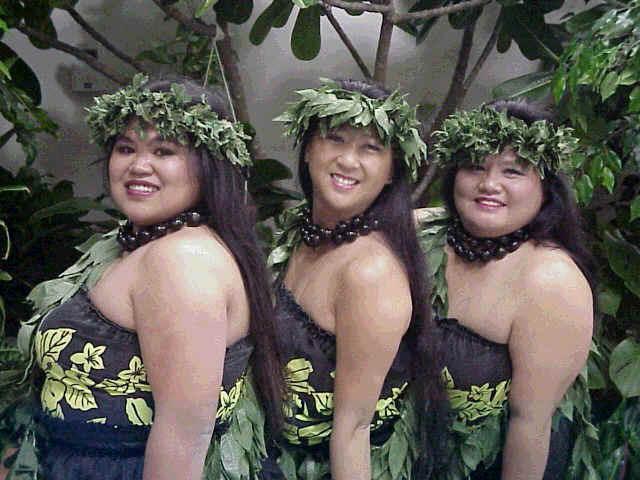

(2) Hawaiian girls
|
|
the tourist’s first-person experiences
(3) “activity-related authenticity”
|
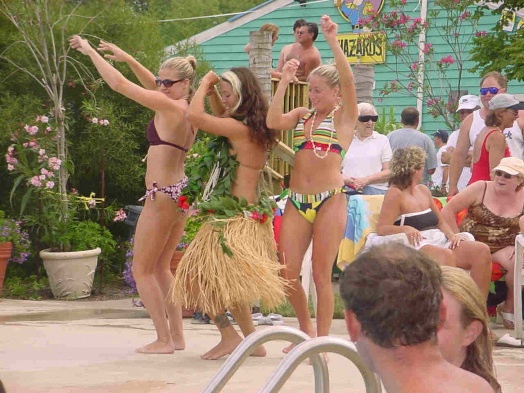
(3) Hula Contest

(3) Honolulu
tourists |
"Objective authenticity of toured objects" (Boorstin /
MacCannell) treat authenticity as a property inhering in toured objects one that
can be definitively measured.
Boorstin denied that tourists had either the wherewithal or
motivation to do so. Travel, he lamented, was a “lost art,” that had become
“diluted, contrived, pre-fabricated”:
“Formerly, when the old-time traveler visited a country
whatever he saw was apt to be what really went on there…. Today what [the
tourist] sees is seldom the living culture, but usually specimens collected and
embalmed especially for him, or attractions specifically staged for him”
(Boorstin 1961:102).
“The American tourist in Japan looks less for what is
Japanese than what is Japenesey” (1961:106).
MacCannell (1973) disputed Boorstin’s assertion that tourists
prefer contrived pseudo-events to authentic cross-cultural encounters,
suggesting instead that touristic space is structured to satisfy the “desire for
authentic experiences” that motivates “touristic consciousness”. MacCannell
argued that “back regions” are staged for tourists to enable them to feel as if
they are penetrating beyond a false front. Like Boorstin, however, MacCannell
questioned the ability of tourists to actually encounter what is authentic in
foreign cultures. The “staged authenticity” ends up undermining the tourist’s
goal: “The idea here is that a false back may be more insidious (heimtückisch) than a false
front, or an inauthentic demystification of social life is not merely a lie but
a superlie.” (1973:599).
Constructivist conceptions of authenticity can be
condensed to five features:
 There is
no absolute and static original or origin on which the authenticity of originals
relies. There is
no absolute and static original or origin on which the authenticity of originals
relies.
Our
notions of origins are constructed to serve present needs and are
contested.
The
experience of authenticity is pluralistic.
Things
are often labeled authentic when they conform to stereotyped images.
Authenticity is, in this regard, a projection of tourists own expectations.
Things
once defined as inauthentic can be redefined over time through a process of
"emergent authenticity."
The constructivist position transforms authenticity from a
property inherent in toured objects to a set of socially-constructed symbolic
meanings communicated by the objects.
The second shift in scholarly emphasis involves a downgrading
of the debate over the authenticity of toured objects in favor of a redefinition
of the term to refer to the tourist’s own first-person experience:
“activity-related” or “existential” authenticity.
“Existential authenticity, unlike object-related version, can
often have nothing to do with the issue of whether toured objects are real. In
search of tourist experience which is existentially authentic, tourists are
preoccupied with an existential state of
Being activated by certain tourist
activities…. They do not literally concern themselves about the authenticity of toured
objects…. They are rather in search of their authentic selves with the aid of
activities or toured objects.” (Wang 1999:359-60). This has been summed up also in the term of "post-tourists"
(Feifer), tourists who are fully aware of and actually deligth in the
inauthenticity of the normal tourist experience.
A layer approach to the authenticity quest could
look like this:
|
First layer: Cultures are
constructed, there is no static, "traditional" and therefore no
authentic culture. Especially the construction of "national cultures" in the
last two centuries has invented typical characteristics without reference to
tourism: Examples: Swiss, German, Malayan culture.
Notions of Authenticity differ across cultures:
Example: A building is authentic if it existing with original materials, even so
the way it looks like has changed (Western), a building is authentic if it still
looks like when it was build, even if the materials are new
(Chinese).
Ways of perceiving the world have been changed by
industrialization. Example: Nobody in the western world can see the sky as it
was seen 200 years ago because of the classification ("invention") of clouds.
|
|
Second layer: Elements of
cultures are constructed and cemented by touristic usage, sometimes feeding back
into the host culture. Examples: Most Swiss do believe that Alphorn playing is a
traditional Swiss activity, most younger Italians do believe that Pizza with
different toppings is an Italian dish. Dominant themes structure the perception
of specific places (f.i. palm-lined beach, Heritage sites).
|
|
Third layer: Tourism is
killing authentic places: A town with an organized way of non-family or
otherwise person-related accomodation is by definition not authentic anymore,
especially with the increase in numbers of visitors.
Tourism is by definition based on a "return-ticket"
visit. Authentic experiences require background knowledge (incl. language), time
and the perception of open-endedness.
|
|
Fourth layer: Mass Tourism
requires standardised, foreseeable, commodized, easy-to-consume situations, the
opposite of real life.
|
|
Fifth layer: No experience
is artificial, all experiences are authentic within the person experiencing
it.
|
Conclusion:
Tourist behaviour as part of the
tourism product
|