|
Fr
11.45-15.30 h S 04
4 SWS Course International Management and Culture
Workload: 60 h classroom work / 180 h self-study
ECTS points: 8
Examination: Presentations (50%), Assignment paper (12-15 pages p.P.) (50%)
Course organisation:
Lecture (before lunch):
Chapters Mead/Andrews (2009) International Management Culture
Part of the book is on Google books
http://books.google.de/books?id=s7_CfAYH_7UC&printsec=
frontcover&dq=mead+andrews+international+management&hl=de&ei=2ZWtTPyjDsvU4waRh6ilBg&sa
=X&oi=book_result&ct=result&resnum=1&ved=0CDYQ6AEwAA#v=onepage&q&f=false
Seminar (after lunch):
One topical book about Intercultural Management presented and
discussed by a student:
Synopsis paper (2-3 pages) handed out to participants one week before presentation
30 min.
presentation, 60 min. structured discussion (included an active part for
participants:
for instance every participant has to tell an experience related
to the topic; prepared role play or debate etc.)
(Presentation+Synopsis 30% mark)
15 pages
assignment paper to be handed in by January 31
Books to choose from:
Nakata: Beyond Hofstede (2 parts)
Graburn: Multiculturalism in New Japan
Bauman: Culture and Liquid Modernity
Morgan: Cross-Cultural Ethics
Dressler: Asian HRM
Bloch/Whiteley: The Global You
Hall/Hall: Understanding Cultural Differences (Germany, France, USA)
Robinowitz/Carr: Modern-Day Vikings (Sweden)
Yamada: Different Games - Different Rules (Japan)
All information given in this lecture is available here (www.arlt-lectures.com) for download.
Please check the homepage of the website regularly for announcements about time changes etc.
Cross Cultural Management
Exercise 3.6 (hardcopy)
Movement in the Culture
Cultures are not fixed, they develop over time. With globalisation the speed of change has increased.
Example:
Tourism comes to Greek islands (1960/70s):
- real estate on the shore becomes more valuable
- jobs are becoming available for women (restaurants, hotels)
- tourists coming to the islands present new role models for gender and generations relations
WHAT CHANGES IN THE LOCAL CULTURE ARE LIKELY TO HAPPEN?
Example:
Germany was divided in two and a half country for 40 years and has been reunited for more than 20 years.
WHICH DIFFERENCES CAN STILL BE FOUND BETWEEN EAST AND WEST,
WHICH DIFFERENCES HAVE DISAPPEARED?
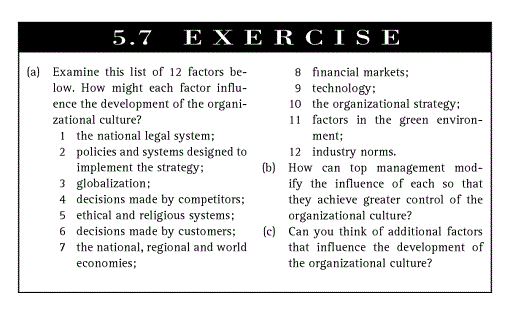
Organisational Culture
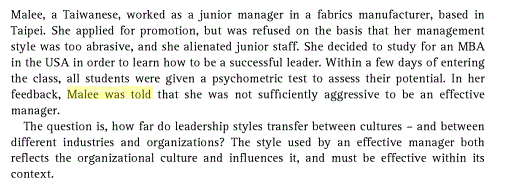
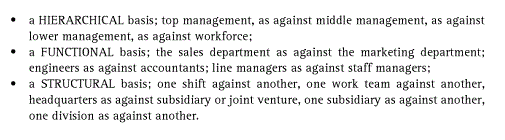
Subcultures
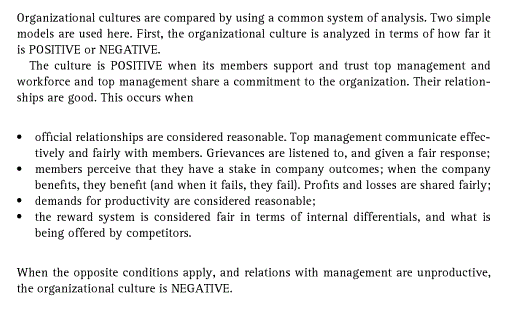
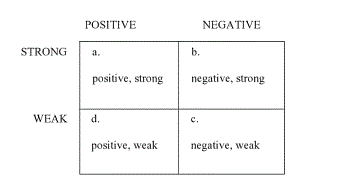
Positive vs. Negative
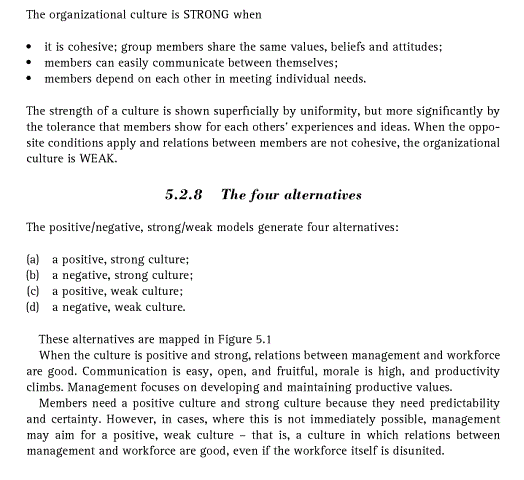
Strong vs. Weak
Culture and Communication - You cannot not communicate
communication.mmap
|