|
|
|
Geert Hofstede
Industrial age: »The big are eating the small«
Service age: »The fast are beating the slow«
Knowledge age: »Socially competent companies win against
socially incompetent companies«
|
Hofstede´s Five-Dimensions Model
Starting with IBM 1970s:
If all
engineers are working in the same company and having the same education
but still behave very differently, there must be cultural
differences.

Culture, understood as the accumulation of shared meanings,
rituals, norms and traditions among members of an organisation or society, is
the collective programming of the mind which distinguishes members of one group
or society from those of another.
Therefore culture is not a phenomenon in its own right. It is
the difference perceived, and only then perceived, by one group when it comes
into contact with and observes another one. It is important to point out that the idea of pure cultures meeting in intercultural exchanges without much knowledge about the other culture is
outdated.
Today almost everybody
outside a given culture has some information and knowledge about that culture,
however superficial.
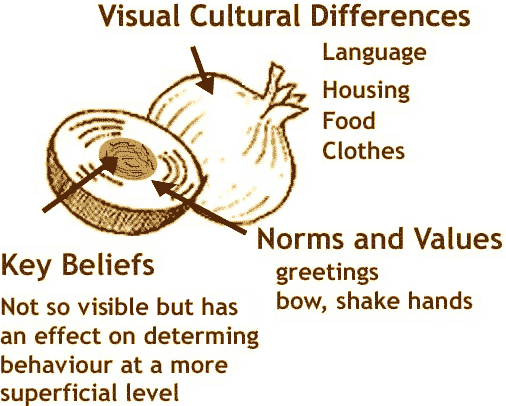
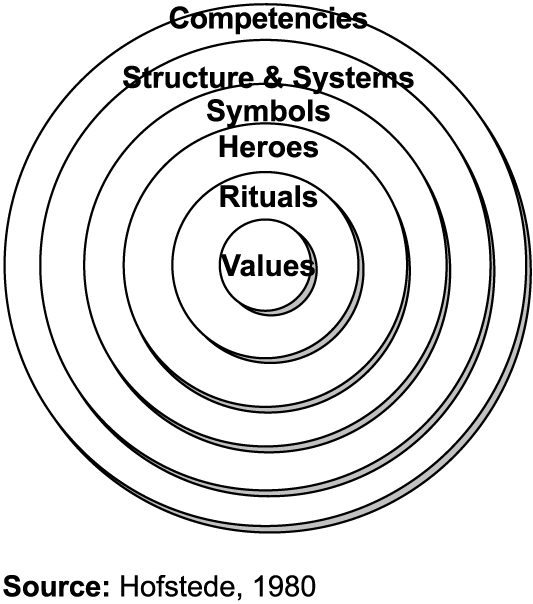
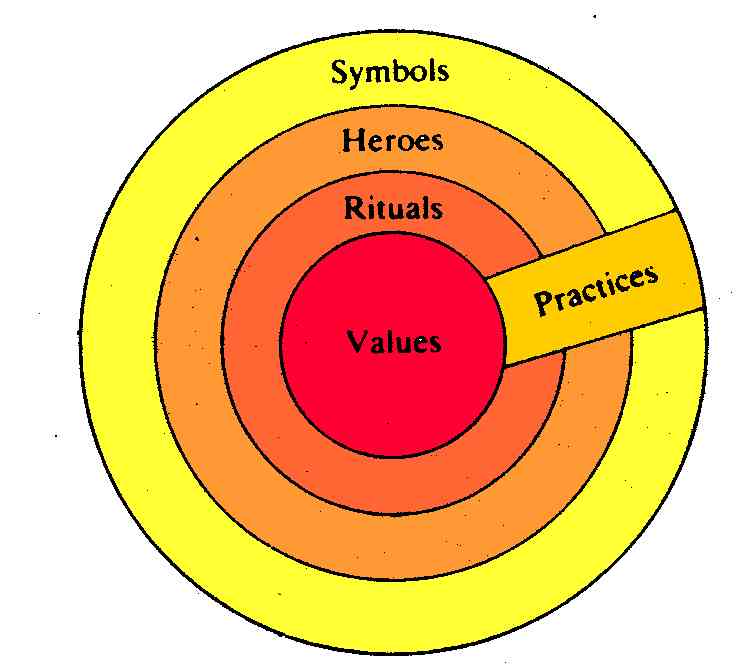
CULTURE AS AN
ICEBERG
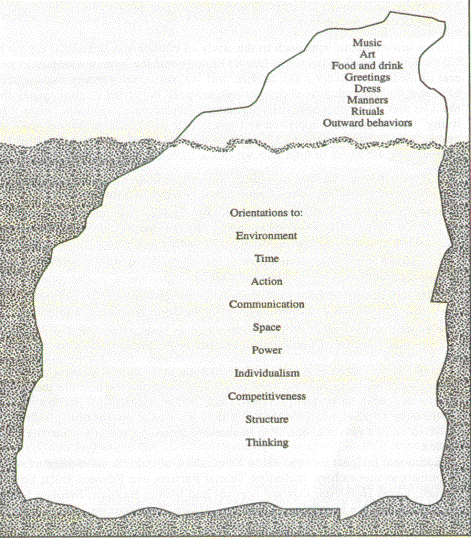
The foundation for most
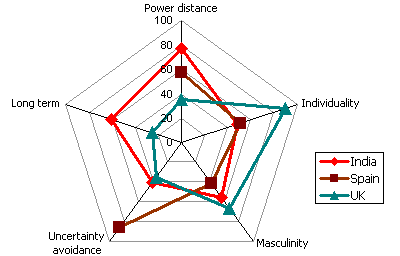
cross-cultural interpretation is the work of Geert Hofstede. He developed with
the help of large-scale samples starting in the 1970s cultural index scores for
five constructs:
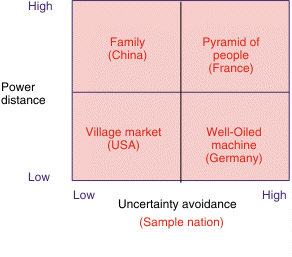
Power distance,
Uncertainty avoidance,
Individualism/Collectivism,
Masculinity/Feminity and
Long term/Short term
orientation.
These dimension are
acquired through “mental programming”, learned patterns of thinking, feeling and
potential acting.
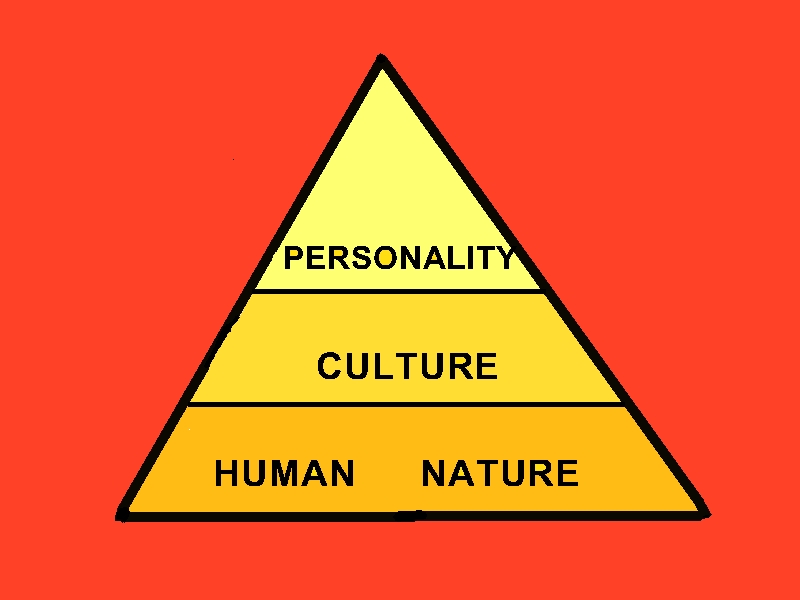
Three level of uniqueness
are distinguished:
The inherited universal
human nature,
the learned culture
specific to certain societies or groups within a society, and
the inherited and learned
individual personality.
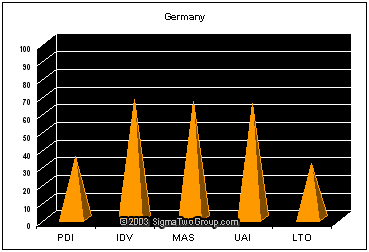
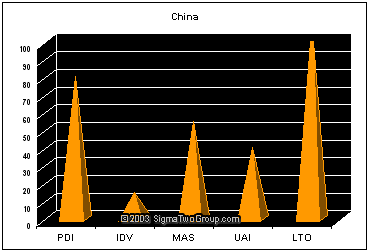
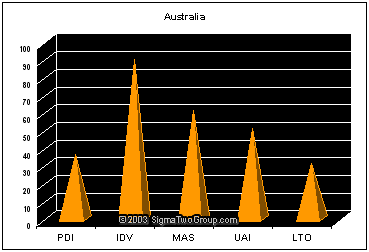
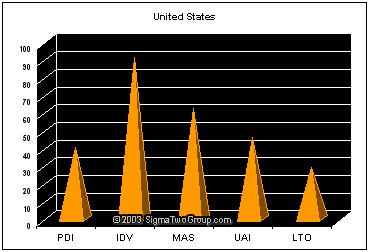
Hofstede’s five cultural
dimensions with scores for China, Japan, USA and Switzerland (lowest possible
score 1, highest possible score 118)
|
Dimensions |
China |
Japan |
USA |
Germany |
|
(1) Power Distance.
The extent to which the less powerful members of a society accept and
expect
that power is distributed unequally. |
80 |
54 |
40 |
35 |
|
(2) Uncertainty
Avoidance. The extent to which a culture programs its members to feel either
uncomfortable or comfortable in unstructured situations and
tries to control the uncontrollable. |
30 |
92 |
46 |
65 |
|
(3) Individualism
is the degree to which individuals are supposed to look after themselves or remain
integrated into groups (Collectivism). |
20 |
46 |
91 |
67 |
|
(4) Masculinity
refers to the distribution of emotional roles between the genders, it opposes
“tough”
masculinity to “tender” feminity. |
66 |
95 |
62 |
66 |
|
(5) Long-term
orientation refers to the extent to which a culture programs its members to
accept delayed gratification of their material, social and emotional
needs. |
118 |
80 |
29 |
31 |
Consequences:
Example: Conflict Management - The textile
dyeing company
Do's and Don'ts vs.
What's and Why's
CULTURE AS AN
ICEBERG
Many intercultural trainings
concentrate on the "Do's and Don'ts" of different cultures:
- Give and receive a namecard to a
Chinese persons always with both hands
- Avoid the number 13 in western
countries
- Do not give knifes or scissors as
a present in China
- Do not slap a German
person on the shoulder as a greeting
- Do not give money as a gift in
Bulgaria ... etc.
Two arguments:
a) For an internationally active
manager, it is impossible to know the "Do's and Don'ts" of all cultures and
sub-cultures (always use a 100 US$ bill when snorting cocaine at a Manhattan
party...) in the world.
b) Reducing the cultural differences
to "above the sea-level" features will not help you to understand the underlying
differences and will not help you to understand the relativeness of your
own
cultural behaviour.
Let us try to understand the "Why?"
behind some different behaviours and customs for some typical
occurences:
Examples
- telling the truth / being
polite
- punctuality /
flexibility
- quoting sources / following
mainstream
- learning from theories / learning
from examples
Please form four groups
and develop a list of 5 Do's and 5 Don't for Germany
and for another country of your choice. Try to analyse the cultural reasons behind the
behaviour using your background knowledge (including Hofstede).
After 20 minutes each group should present the
list and the explanations.
|
|