|
Tourism Politics in New Zealand:
1991:
Split between marketing and
policy:
New Zealand Tourism Board for
marketing
Ministry of Tourism for policies
Today:
ROLES AND RESPONSIBILITIES
TOURISM INDUSTRY ASSOCIATION NEW ZEALAND
(TIA)
TIA is the industry’s peak trade association
representing around 2,000 members ranging from small owner–operator
businesses to large stock exchange–listed companies. It is the ‘voice’
of the industry.
A private sector, membership–based organisation,
TIA advocates for the interests of its members to central and local
government, and other decision makers. It provides information,
advice and tools to help members run successful businesses, and
organises tourism industry events each year. These include the international
business–to–business trade shows, TRENZ (Tourism Rendezvous New
Zealand) and PURE LUXURY New Zealand, the Tourism Industry Awards
and the Tourism Industry Conference.
www.tianz.org.nz,
www.trenz.co.nz,
www.pureluxury.co.nz,
www.nztourismconference.co.nz,
www.tourismawards.co.nz
MINISTRY OF TOURISM (TMT)
The Ministry of Tourism is a government agency.
Its role is to make sure that tourism makes a sustainable and increasing
contribution to New Zealand’s economy.
The Ministry provides policy advice to the
Minister of Tourism. It also administers and monitors the Government’s
investments in tourism marketing and other programmes.
The Ministry manages the Core Tourism Data
Set and distributes this and other research information to the public
and private sectors. It is also responsible for the Major Events
Development Fund, and provides advice to attract, retain, and grow
major events in New Zealand.
www.tourism.govt.nz,
www.tourismresearch.govt.nz,
www.majorevents.govt.nz
TOURISM NEW ZEALAND (TNZ)
Tourism New Zealand is a crown entity responsible
for marketing New Zealand as an international visitor destination.
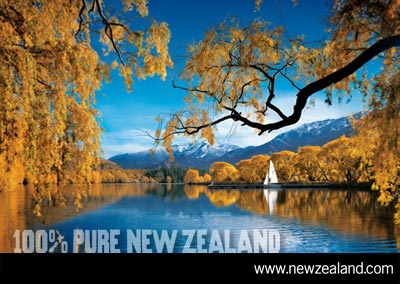
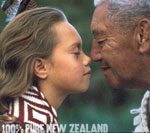
It owns the 100% Pure New Zealand brand, under which the global
campaign is managed.
Tourism New Zealand follows up that marketing
message by providing quality information to visitors, through the
i–SITE network, and setting standards through the Qualmark quality
assurance programme.
Tourism New Zealand works with national tourism
bodies and offshore tourism distributors to promote New Zealand
tourism.
www.newzealand.com,
www.tourismnewzealand.com
OTHER CENTRAL GOVERNMENT AGENCIES
Government departments, ministries, and other
government organisations that influence the
tourism sector, either directly or indirectly,
include the following.
• Department of Internal Affairs
• Ministry for the Environment
• Ministry of Economic Development
• Energy Efficiency and Conservation Authority
• Department of Conservation
• Ministry for Culture and Heritage
• Ministry of Education
• Ministry of Health
• Ministry of Transport
• New Zealand Trade and Enterprise
• Department of Labour (including Immigration
New Zealand)
• Ministry of Foreign Affairs and Trade
• Te Puni Kokiri
• Tertiary Education Commission
• Ministry of Research, Science and Technology
and Foundation for Research Science and Technology
LOCAL GOVERNMENT
New Zealand’s local government is made up
of 12 regional councils and 73 territorial authorities.
Councils must make decisions about and set
directions for promoting the social, cultural, environmental, and
economic well–being of their communities. Their role in the tourism
sector is that they manage assets such as public land, and they
provide important infrastructure. They also represent the host communities.
The national interests of the 85 councils
are represented by Local Government New Zealand (LGNZ). LGNZ represents
the national interests of all 85 councils of New Zealand. It promotes
best practice in the local government sector and provides policy
support, advice, and training to councils. For example, in 2003,
Local Government New Zealand produced Postcards From Home, a local
government response to the New Zealand Tourism Strategy 2010.
REGIONAL TOURISM ORGANISATIONS
Regional Tourism Organisations act as a bridge
between tourism operators, national tourism bodies, and local and
central government. Regional Tourism Organisations are also responsible
for promoting their regions to domestic and international visitors.
There are currently 28 Regional Tourism Organisations.
They vary widely in size, structure, and the scope of activities
they undertake. Regional Tourism Organisations are mostly funded
by local authorities.
The interests of the Regional Tourism Organisations
are represented by their umbrella organisation, Regional Tourism
Organisations New Zealand.
NEW ZEALAND MAORI TOURISM COUNCIL
The New Zealand Maori Tourism Council works
to promote Maori tourism opportunities.
To do this, it:
• promotes Maori in tourism, by supporting
and developing Maori Regional Tourism Organisations at a national
level
• recommends the appointment of Maori tourism
representatives to national tourism bodies
• provides national advocacy for the promotion
of Maori in tourism
• assists with the implementation of the
New Zealand Tourism Strategy
• engages with other national and international
tourism industry organisations for the promotion of Maori in tourism
• facilitates opportunities for national
and international marketing of Maori in tourism.
There are also 13 Maori Regional Tourism
Organisations that help member operators and promote regional Maori
tourism.
ECONOMIC DEVELOPMENT AGENCIES
Economic Development Agencies are regionally
based government agencies providing advice
to businesses and regional groups to assist
sustainable economic growth in their respective regions. They also
offer networking, education and training, support and mentoring
services to the business community. These include help with attracting
investment and securing grants and funding, business incubators,
management of i–SITE centres, networking opportunities, and community–based
projects.
Specific programmes include the Biz Info
Centre and a range of employment, enterprise, and youth training
programmes.
INDUSTRY ASSOCIATIONS
As well as the Tourism Industry Association,
there are a number of major industry organisations in New Zealand
which represent the interests and work to maintain the standards
of different sectors within the tourism industry. These include,
but are not limited to:
• Inbound Tour Operators Council of New Zealand
• Travel Agents Association of New Zealand
• Bus and Coach Association New Zealand
• Motel Association of New Zealand
• New Zealand Hotel Council
• Hospitality Association of New Zealand
• Holiday Accommodation Parks of New Zealand
• @home NEW ZEALAND
• Restaurant Association of New Zealand
• New Zealand Retailers Federation
TRAINING AND EDUCATION
Training and education in the tourism sector
is provided by a range of tertiary institutions.
They include universities and polytechnics
offering tourism and hospitality–related courses and degrees, and
specialist institutions such as the Queenstown Resort College, which
is dedicated specifically to the training of tourism professionals.
Three organisations, the Aviation, Tourism
and Travel Training Organisation (ATTTO), the Sport, Fitness and
Recreation Industry Training Orgainisation (SFRITO) and the Hospitality
Standards Institute (HSI), also coordinate training under the Industry
Training Act 1992. Their roles include:
• developing the arrangements for the delivery
of training (on and off the job)
• developing the arrangements for the monitoring
of training and assessment of trainees
(on and off the job)
• providing leadership within industry on
matters relating to skills and training needs by identifying current
and future skill needs, developing strategic training plans to assist
the industry to meet those needs, and promoting training that will
meet those needs to employers and employees.
These organisations offer apprenticeship
schemes that provide on–the–job experience and training for students
doing a national certificate in tourism.
RESEARCH PROVIDERS
Government research into the tourism sector
is primarily provided by the Ministry of Tourism, working with Statistics
New Zealand. They develop and maintain a number of data sets on
international and domestic travel patterns. This is used for analysis
and forecasting. This information is available free on the Ministry
of Tourism website.
Other research is carried out by tertiary
institutions and central government agencies.
A number of private research providers also
undertake research for the tourism sector at national, regional,
and business levels.
Strategy 2015: .pdf

|