|
Tourism theories and concepts can be
divided in demand side orientated and supply side orientated approaches.
|
Demand-side
orientated: Looking at tourism through the eyes of the consumers.
Examples:
All parts of destination part of product.
Destination defined by visitor.
Next member of hotel staff should help.
UNWTO definition:
The activities of persons travelling to and staying in places
outside their usual environment for not more than one consecutive year for
leisure, business and other purposes not related to the exercise of an activity
remunerated from within the place visited.
Most social scientists have demand-side
orientation.
Over-supply in post-industrial
societies leads to concentration on demand side.
|
|
Supply-side
orientated: Looking at tourism from producers
point of view.
Example: Direct and derived (abgeleitetes)
product.
Destination defined by political border and
financing.
Responsible member of hotel staff should
help. ("Kollege kommt gleich")
Pearce/Morrison/Rutledge definition:
Tourism
is the sum of government and private sector activities which shape
and serve the needs and manage the consequences of holiday and business
travel.
Most economic scientists (especially
in Germany) have supply-side orientation.
Under-supply in industrial
societies lead to concentration on supply side.
|
Demand
Tourism depends on
 the opportunity to travel and stay in
another place (resources) the opportunity to travel and stay in
another place (resources)
and on
the wish of people to become tourists
(demand)
|
What
kind of resources to you need to travel?
Let us find them together.
|
freedom,
money, time, fitness, no family constraints
Definitions
of Touristic Demand
Supply-side orientated definition: "The
total number of persons who travel, or wish to travel, to use tourist
facilities and services at places away from their places of work
and residence" (Mathiesson/Wall 1982)
Demand-side orientated definition: "The
relationship between individuals' motivation to travel and their
ability to do so." (Pearce 1995)
Forms of Touristic Demand
effective or actual demand
 travel propensity /
departure rate travel propensity /
departure rate
(the percentage of a population that actually engages in
tourism.
Net t.p. = percentage of population with at least one
trip/year
Gross t.p. = total no. of trips / population)
Example:
|
Travel Propensity |
Germany |
France |
|
Net t.p. |
1964: 39
1984: 55
1994: 78
(2002:
75) |
1994: 63
|
|
Gross t.p. (1994) |
109 |
101 |
suppressed
demand:
- potential demand
- deferred (postponed)
demand
non-demand
reasons not to travel:
-
expense
- lack of time
- physical limitations
- family
circumstances
- lack of interest
limitations can be changed by tailor-made offers
|
How
to overcome lack of money, time, fitness, interest or
existing family constraints?
Let us develop some ideas together
for offers from the tourism industry for this potential
customer groups.
|
Non-personal restrictions on Demand
However, not all restriction on Demand are
personal:
restrictions to leave the home country
(passport)
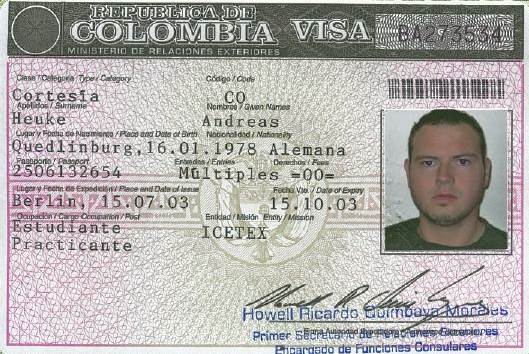
restrictions to enter the guest
country (visa)
restrictions on currency
exchange
restrictions on religious or ethnical
grounds
|
Please
name some examples of such non-personal restrictions
|

Demand is open to
subjective and objective changes
|