|
BACKGROUND:
Hofstede´s
Five-Dimensions Model
Culture,
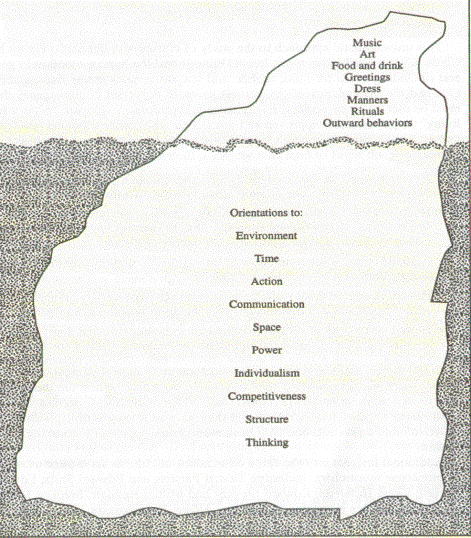
understood as the accumulation of shared meanings, rituals, norms and
traditions among members of an organisation or society, is the collective
programming of the mind which distinguishes members of one group or society
from those of another.
Therefore culture is not a phenomenon in its own right.
It is the difference perceived, and only then perceived, by one group when it
comes into contact with and observes another one. It is
important to point out that the idea of pure
cultures meeting in intercultural
exchanges without much knowledge about the other culture is outdated.
Today
almost
everybody outside a given culture has some information and knowledge about that
culture, however
superficial.
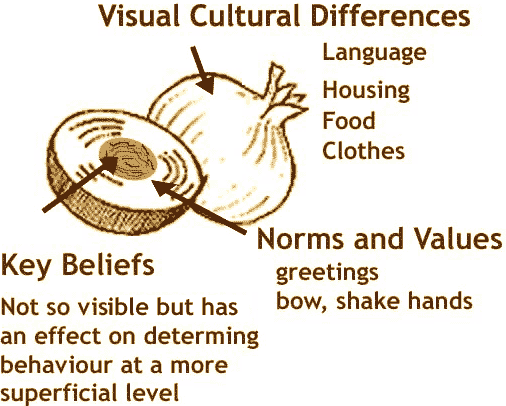
CULTURE
AS AN ICEBERG
The foundation for most cross-cultural
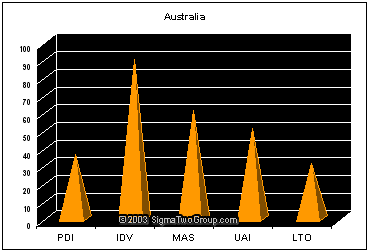
interpretation is the work of Geert Hofstede. He developed with the help of
large-scale samples starting in the 1970s cultural index scores for five
constructs:
Power distance,
Uncertainty avoidance,
Individualism/Collectivism,
Masculinity/Feminity and
Long term/Short term orientation.
These dimension are
acquired through “mental programming”, learned patterns of thinking, feeling
and potential acting.
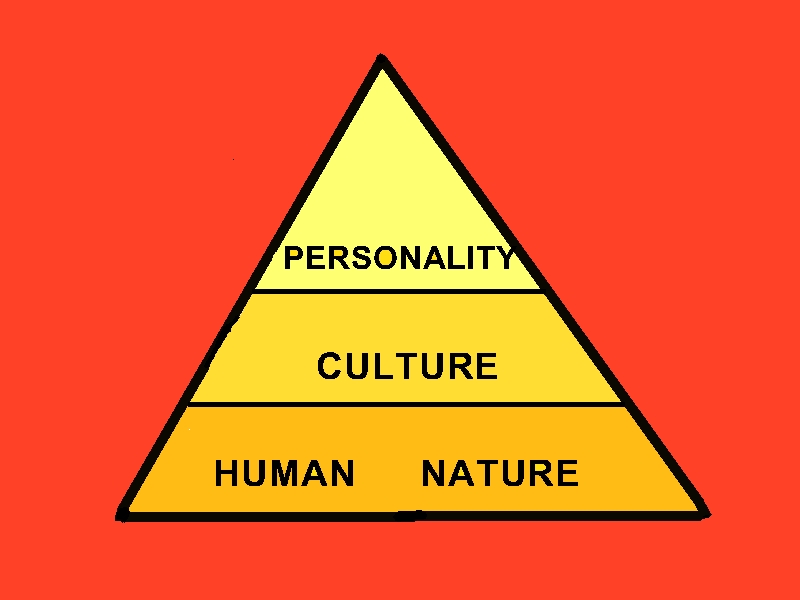
Three level of uniqueness are distinguished:
The
inherited universal human nature,
the learned culture specific to certain
societies or groups within a society, and
the inherited and learned individual
personality.
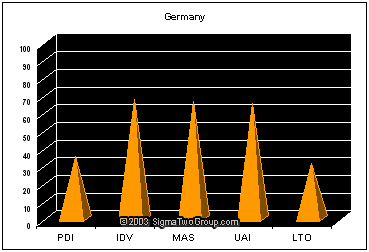
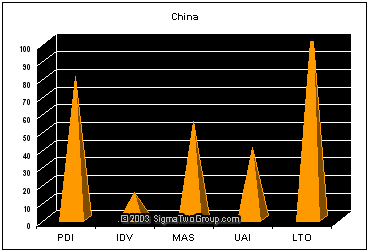
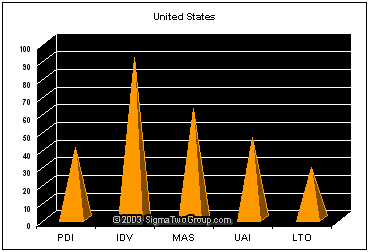
Hofstede’s five cultural dimensions
with scores for China, Japan, USA and Switzerland (lowest possible score 1,
highest possible score 118)
|
Dimensions
|
China
|
Japan
|
USA
|
Germany
|
|
(1) Power Distance. The extent to which
the less powerful members of a society accept and expect that power is
distributed unequally.
|
80
|
54
|
40
|
35
|
|
(2) Uncertainty Avoidance. The extent to
which a culture programs its members to feel either uncomfortable or
comfortable in unstructured situations and tries to control the
uncontrollable.
|
30
|
92
|
46
|
65
|
|
(3) Individualism is the degree to which
individuals are supposed to look after themselves or remain integrated into
groups (Collectivism).
|
20
|
46
|
91
|
67
|
|
(4) Masculinity refers to the
distribution of emotional roles between the genders, it opposes “tough”
masculinity to “tender” feminity.
|
66
|
95
|
62
|
66
|
|
(5) Long-term orientation refers to the
extent to which a culture programs its members to accept delayed
gratification of their material, social and emotional needs.
|
118
|
80
|
29
|
31
|
Consequences:
Example: Conflict Management
- The textile dyeing
|