|
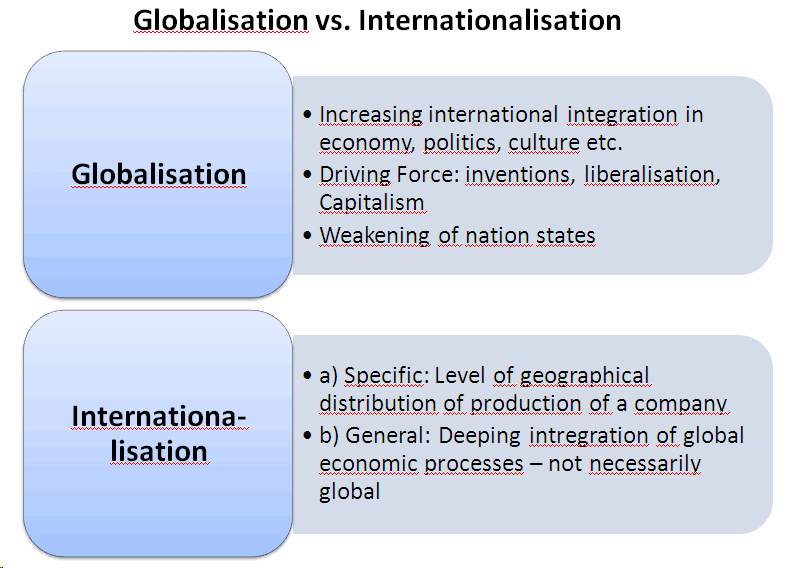
Globalisation is an umbrella term for a complex series of economic,
social, technological, cultural and political changes across the globe.
It is a process of increasing interdependence and interaction among
people, companies, and governments of different nations, driven by
international trade and made possible by innovations in information
technology.
Some argue that Globalisation allows poor countries and their
citizens the opportunity to raise their standards of living, encourage
democracy and embrace multiculturalism. Others claim that Globalisation
has simply allowed Western corporations to overwhelm world markets at
the expense of small businesses, local cultures, traditions and values.
The promotion and resistance of Globalisation has therefore taken shape
at both a popular and governmental level, however, such efforts can
only hope to steer Globalisation, not alter it. The convergence of
economics, culture and politics is happening around the globe. While
thoughtful, deliberate, and innovative leadership is necessary to help
shape Globalisation, the process itself is inevitable.
Globalisation has effects on the environment, culture, political
systems, economic development and prosperity, and on human physical
well-being in societies around the world. To truly comprehend the
interconnected nature of a globalized world; to truly understand the
consequences of our foreign policy choices; to truly understand the new
face of the world -- we all need to understand how
Globalisation works and the policy choices we are facing.
|
Let us collect some ideas about the
causes and the effects of Globalisation.
|
|
CAUSES of Globalisation
|
EFFECTS of Globalisation
|
|
Technology
|
More Interactions between
people
|
|
Lower Trade Barriers
|
Knowledge Transfer
|
|
More Interactions between
people
|
Outsourcing
|
|
History – Diversity Interaction
between native countries and emigrants / former slaves
|
Acculturisation, Assimilation
|
|
Stronger international / global
organisations
|
|
|
Level of education
|
|
|
Foreign Direct Investment
|
|
|
Need for expansion
|
|
|
Colonisation (Culture, Media)
|
|
Thomas Friedman: The World is Flat. A Brief
History of the Globalized World in the 21st Century (2005): The
Ten Forces That Flattened the World
11/09/89 - Wall
08/09/95 - Netscape
Work
Flow Software
Open-Sourcing
Outsourcing
Offshoring
Supply-Chaining
Insourcing
In-forming
The
Steroids: Digital, Mobile, Personal, Virtual
Example: Automobile industry
Example: R&D Spending
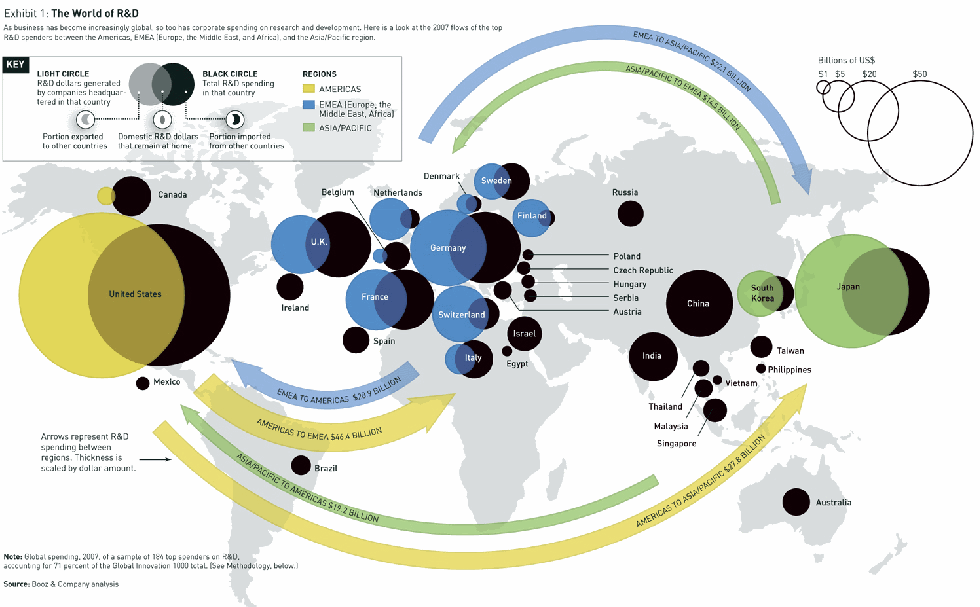
Source: University
of Thessaloniki
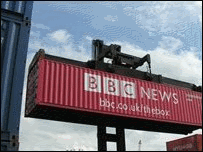
Example: "The Box" by BBC http://news.bbc.co.uk/2/hi/business/8172846.stm
The Box is an ambitious and unique year-long project for BBC News
to tell the story of international trade and globalisation by tracking
a standard shipping container around the world.
It is a project which plans to deliver content for television, radio
and online audiences - telling the individual stories behind what makes
the global economy tick.
We have painted and branded a BBC container and bolted on a GPS transmitter so you can follow its progress
all year round as it criss-crosses the globe. The Box will hopefully
reach the US, Asia, the Middle East, Europe and Africa and when it does
BBC correspondents will be there to report on who's producing goods and
who's consuming them.
|